
Packaging is one of the most important decisions in dietary supplement product development. It influences product protection, shelf presentation, customer convenience, transportation, and the overall experience of using a supplement.
For supplement brands, packaging selection involves much more than choosing an attractive bottle or pouch. A suitable packaging system must be compatible with the formulation, provide appropriate protection during storage and distribution, and meet the requirements of the intended market.
From plastic and glass bottles to flexible pouches, stick packs, blister packs, and tubes, different materials and formats offer different advantages.
This guide explores the most common supplement packaging materials, their applications, and the factors brands should consider when selecting packaging for their products.
Why Packaging Matters in Supplement Manufacturing
Dietary supplements are available in many forms, including capsules, softgels, tablets, powders, gummies, liquids, jellies, chewing gums, and pastes.
Each format presents different packaging requirements.
For example, a moisture-sensitive powder may require a packaging system with appropriate water vapor barrier properties. An oil-based supplement may need protection from oxidation and light exposure. A jelly or paste formulation requires careful evaluation of seal integrity, material compatibility, and product stability.
Effective packaging supports four essential objectives:
Product protection: Helping protect a supplement against relevant environmental factors, contamination, and physical damage.
Convenience: Providing a suitable way to store, dispense, transport, and use the product.
Brand presentation: Communicating product identity through container design, labeling, and packaging graphics.
Regulatory compliance: Supporting relevant food-contact material, packaging, and labeling requirements in the destination market.
The appropriate packaging choice depends on the complete product and packaging system rather than appearance alone.
Understanding Packaging Materials vs. Packaging Formats
Before comparing options, it is helpful to understand the difference between packaging materials and packaging formats.
A packaging material refers to the substance used to manufacture a packaging component, such as PET plastic, HDPE plastic, glass, aluminum, or a multilayer flexible film.
A packaging format refers to the physical structure or presentation of the package, such as a bottle, jar, pouch, sachet, stick pack, tube, or blister pack.
For example, two supplement bottles may look similar but be manufactured from different plastic materials. Likewise, two stand-up pouches may have different film structures and barrier properties.
The material, container design, closure, and sealing method should therefore be evaluated together.
Common Dietary Supplement Packaging Materials
1. PET Plastic
PET (Polyethylene Terephthalate) is a widely used plastic material for rigid containers, including bottles and jars.
PET can provide a clear appearance, allowing consumers to see the contents when transparent packaging is appropriate.
It is also relatively lightweight compared with glass, which may be useful for transportation and handling.
Common considerations include:
- Transparent or colored container options.
- Lightweight, rigid packaging.
- Suitability for selected capsules, tablets, gummies, and liquid products.
- The need to assess oxygen and moisture barrier performance for the specific container design.
- PET is not automatically suitable for every ingredient or formulation. Material compatibility, intended contact conditions, and barrier requirements should be evaluated before final selection.
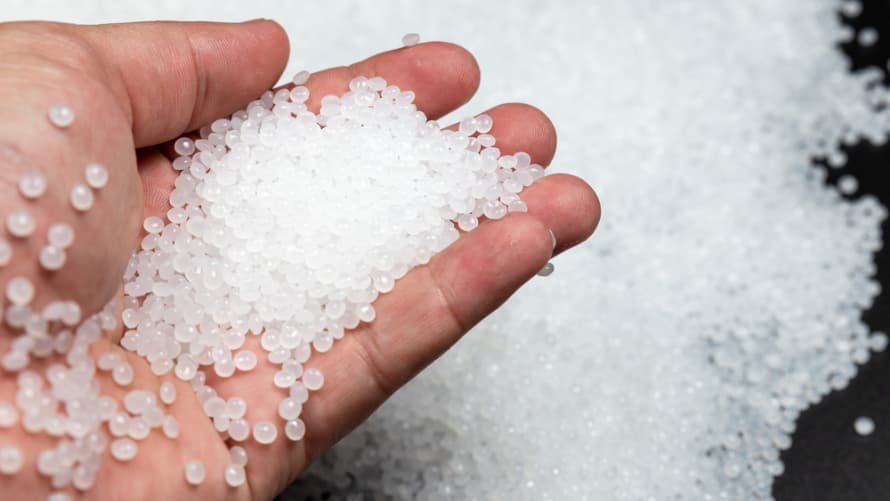
2. HDPE Plastic
HDPE (High-Density Polyethylene) is frequently used for supplement bottles and powder containers.
HDPE packaging is commonly associated with opaque or semi-opaque containers and offers a durable, lightweight packaging option.
Potential applications include capsules, tablets, powders, and other formulations where the container system provides suitable protection.
Important selection factors include:
- Container wall thickness and construction.
- Moisture barrier requirements.
- Closure and induction-seal compatibility.
- Product-to-container material compatibility.
The barrier performance of an HDPE bottle depends on its specific design and the complete packaging system. It should not be assumed to provide sufficient moisture protection for every formulation without evaluation.

3. PP Plastic
PP (Polypropylene) is another plastic material used in packaging components.
It may be found in caps, closures, containers, and certain dispensing systems, depending on their design and intended use.
PP is often selected for particular mechanical and processing characteristics, but its suitability depends on the formulation and packaging application.
When reviewing PP packaging, brands should consider material specifications, sealing performance, and applicable food-contact requirements.
4. Glass Packaging
Glass is used for selected dietary supplement bottles and jars, particularly where product presentation and material compatibility are important.
Clear and amber-colored glass provide different visual and light-transmission characteristics.
Amber glass may help reduce exposure to certain wavelengths of light, although protection depends on the actual glass specification and product sensitivity.
Glass packaging may be considered for certain oils, drops, liquids, and other supplement products.
However, glass also introduces practical considerations:
- Greater weight compared with many plastic alternatives.
- Breakage risk during handling and shipping.
- Closure and dropper compatibility.
- Additional protective packaging requirements.
The selection of glass should be based on technical suitability, product stability, and logistics rather than visual appearance alone.

5. Aluminum Foil and Multilayer Flexible Films
Flexible supplement packaging often uses films made from more than one material.
Depending on the application, these structures may include plastic layers, aluminum foil, coatings, or other barrier materials.
Different layers can perform different functions, such as providing strength, heat-sealing capability, moisture protection, or oxygen barrier performance.
Such materials are commonly considered for:
- Single-serving powder sachets.
- Stick packs.
- Flexible supplement pouches.
- Certain jelly and liquid packs.
Not every flexible pouch has the same protection level.
The exact film structure, seal quality, and measured barrier properties should be reviewed against the product’s requirements.
For brands evaluating packaging claims, the terms high barrier or foil packaging should be supported by actual packaging specifications rather than appearance alone.
Common Supplement Packaging Types
The packaging material is only one part of the selection process. Brands must also choose a format suitable for the dosage form and customer experience.
Bottles and Jars
Bottles and jars are among the most recognizable supplement packaging formats.
They are commonly considered for capsules, softgels, tablets, gummies, and powders. Bottles may also be used for liquid formulations when the container and closure system are appropriate.
Packaging development may involve selecting:
- Container volume and shape.
- Material and color.
- Cap or closure type.
- Induction seal or other suitable sealing system.
- Label dimensions and decoration method.
- Measuring scoops or dispensing accessories where appropriate.
A bottle should be assessed as a complete container-closure system, not as an empty container alone.
Stand-Up Pouches
Stand-up pouches are a flexible packaging option commonly considered for powder supplements and certain other dry products.
They provide printable surface area for branding and may be designed with resealable closures.
For products that are repeatedly opened, brands should consider how the closure performs during normal consumer use.
The pouch film, zipper, heat seals, and overall construction all influence performance.
Stick Packs
Stick packs are narrow, elongated packages commonly used for individual servings.
They can be suitable for certain powdered supplements and, when specifically designed and validated for the product, some liquid or jelly formulations.
Potential advantages include convenient portioning, portability, and individual packaging.
Brands should confirm fill weight, powder flow or filling behavior, sealing performance, and compatibility with the intended product.
Sachets
Sachets are individual packets that may be manufactured in various shapes and dimensions.
They are commonly considered for powder, granule, and selected gel or liquid products.
Unlike the typically narrow stick pack, a sachet can provide a wider range of pack shapes.
The choice between sachets and stick packs depends on serving volume, filling characteristics, package dimensions, available equipment, and consumer-use requirements.
Blister Packs
Blister packaging is commonly associated with capsules and tablets.
Individual cavities can separate units and help support organized dispensing.
Different blister material constructions provide different levels of protection against moisture and other environmental conditions.
For moisture-sensitive products, the specific blister structure and its measured performance are especially important.
Tubes and Dispensing Containers
Tubes and other dispensing systems may be considered for paste or semi-solid supplement formulations.
Their suitability depends on factors such as viscosity, product compatibility, closure performance, dispensing accuracy, and expected use.
Liquid supplements may require separate dispensing solutions, such as droppers, pumps, or measured-dose closures.
The dispenser is part of the overall packaging system and should be evaluated alongside the container.
Folding Cartons and Outer Packaging
Paperboard cartons, sleeves, and other secondary packaging components are often used to support product identification, presentation, handling, and transport.
They can be combined with bottles, blister cards, sachets, or stick packs.
However, an outer carton generally should not be assumed to replace the protective function of suitable primary packaging.

Which Packaging Is Suitable for Different Supplement Dosage Forms?
The following examples provide a starting point for packaging discussions.
They are not universal recommendations or substitutes for formulation-specific testing.
| Supplement Dosage Form | Packaging Options to Evaluate | Key Considerations |
| Capsules | Plastic bottles, glass bottles, blister packs | Moisture protection, closure integrity, fill count |
| Softgels | Bottles, blister packs | Temperature, moisture, oxidation, product compatibility |
| Tablets | Bottles, blister packs | Moisture exposure, breakage, dispensing |
| Powders | Jars, tubs, stand-up pouches, sachets, stick packs | Moisture barrier, serving size, sealing, flowability |
| Gummies | Bottles, jars, suitable flexible packs | Moisture control, sticking, temperature, seal integrity |
| Liquid Supplements | Glass or compatible plastic bottles | Leakage, light exposure, dispensing, compatibility |
| Jelly Supplements | Validated sachets, stick packs, or other suitable packs | Microbial stability, seal integrity, film compatibility |
| Chewing Gum Supplements | Individual wrappers, blister packs, suitable pouches | Flavor retention, moisture, package integrity |
| Paste Supplements | Tubes, suitable sachets or dispensing packs | Viscosity, dispensing, leakage, material compatibility |
Actual packaging options depend on the specific formulation, manufacturing equipment, and project requirements.
Five Factors to Consider Before Choosing Supplement Packaging
1. Product Stability and Barrier Protection
Packaging should be selected with the product’s known or anticipated sensitivities in mind.
Relevant factors may include exposure to moisture, oxygen, light, and temperature.
For moisture-sensitive formulations, water vapor transmission through the packaging system can be a key consideration.
Testing approaches such as those described in USP General Chapter <671>, Containers—Performance Testing, can help assess functional packaging properties.
However, the appropriate testing strategy depends on the product and applicable requirements.
2. Material Compatibility
Packaging materials and their components should be suitable for the intended product.
This includes not only the main container but also the cap, liner, seal, dispensing components, and any materials that may contact the formulation.
Material compatibility can be particularly important for oil-based, acidic, flavored, or semi-solid products.
Brands should request relevant material specifications and evaluate the complete system under its intended conditions of use.
3. Serving Size and Consumer Convenience
Packaging should accommodate the intended serving size and use pattern.
A bulk powder product may benefit from a resealable container and measuring scoop, while a travel-oriented formulation may be better suited to individual sachets or stick packs.
The filling volume, product density, container dimensions, and consumer experience all need consideration.
4. Total Packaging Cost
The unit price of a bottle or pouch is only one part of the total packaging cost.
Brands should also consider:
- Closure, liner, and sealing components.
- Labels and printing requirements.
- Packaging tooling or customization charges.
- Filling and packaging operations.
- Secondary cartons and shipping materials.
- Transportation and potential breakage costs.
- Minimum order quantities and component lead times.
A format that appears inexpensive at the component level may not always deliver the lowest overall project cost.
5. Destination-Market Requirements
Packaging materials and labeling must be assessed against the applicable requirements of the intended market.
For the United States, the FDA regulates food-contact substances under applicable legal provisions. Dietary supplement manufacturing rules also include packaging and labeling controls under 21 CFR Part 111.
Within the European Union, food-contact materials are subject to Regulation (EC) No 1935/2004, together with other applicable material-specific requirements.
The EU’s Packaging and Packaging Waste Regulation (EU) 2025/40 also began applying on August 12, 2026, with certain obligations taking effect on different dates.
For products intended for EU markets, packaging development should therefore consider both food-contact safety and applicable packaging sustainability, composition, and waste-related requirements.
Packaging Customization for Private Label Supplement Brands
Packaging plays an important role in developing a recognizable private label supplement product.
Customization may involve different levels of complexity, from selecting an existing container and applying branded labeling to developing a distinctive packaging structure.
Potential customization elements include:
Container specifications: Shape, size, material, color, and closure design.
Label and graphics: Product identity, visual layout, printing, and required information.
Flexible packaging: Film structure, dimensions, printed design, and sealing requirements.
Dispensing accessories: Scoops, droppers, pumps, or other suitable components.
Secondary packaging: Cartons, sleeves, inserts, and shipping configurations.
The availability and cost of these options depend on the supplier, manufacturing equipment, order volume, and packaging specifications.
Brands should confirm technical feasibility before committing to packaging artwork or purchasing components.
Questions to Ask Your Supplement Packaging Supplier
Before approving packaging for production, supplement brands can use the following checklist:
- What material is used for each product-contact component?
- Is the material suitable for the formulation and intended conditions of use?
- What evidence supports the packaging’s barrier performance?
- Has the complete container and closure system been evaluated?
- Are the packaging specifications compatible with the filling equipment?
- What are the minimum order quantities for standard and customized options?
- Can the supplier provide material specifications and relevant compliance documentation?
- What testing is needed to support product stability and the proposed shelf life?
- How will packaging components be inspected and controlled during production?
- Are there destination-market packaging or labeling requirements that need additional review?
- These questions help connect packaging design decisions with manufacturing and quality requirements.

Supplement Packaging and OEM/ODM Manufacturing at Xinde Group
Founded in 1984, Guangdong Xinde Group provides dietary supplement OEM, ODM, and private label manufacturing solutions.
For brands developing supplement products, packaging decisions should be considered alongside dosage-form selection, formulation development, product specifications, and manufacturing preparation.
A well-planned packaging project starts with understanding the supplement itself.
This includes its ingredient characteristics, dosage form, proposed serving size, target market, preferred package presentation, and expected commercial requirements.
Through early technical discussions, brands and manufacturing partners can evaluate appropriate packaging directions before finalizing specifications and design.
Individual packaging options remain subject to project feasibility, available production arrangements, and applicable requirements.
Frequently Asked Questions
What Is the Best Packaging Material for Dietary Supplements?
There is no single best material for every supplement. The appropriate choice depends on ingredient compatibility, protection requirements, dosage form, expected shelf life, and target market.
Is PET Better Than HDPE for Supplement Bottles?
Neither material is universally better. PET and HDPE have different characteristics, and performance depends on the container design, closures, formulation, and relevant barrier requirements.
What Is the Difference Between a Stick Pack and a Sachet?
A stick pack is generally a narrow, elongated individual packet. A sachet is a broader category of individual flexible packages that can have various shapes and dimensions. The choice depends on product properties and packaging requirements.
Can Gummies Be Packaged in Pouches?
Certain gummies may be suitable for appropriately designed flexible packaging, but moisture control, sticking, temperature sensitivity, and stability need to be evaluated for the actual product.
Are Glass Bottles Always Better for Liquid Supplements?
No. Glass can be suitable for certain formulations, but compatibility, closure design, light protection, breakage risk, and logistics must be considered. Some liquid products may be better suited to validated plastic packaging systems.
Does Packaging Determine a Supplement’s Shelf Life?
Packaging can significantly influence stability, but shelf life depends on the formulation, manufacturing process, packaging system, and storage conditions. Appropriate stability evidence is needed to support a shelf-life claim.
Choosing the Right Packaging for Your Supplement Brand
The right supplement packaging should support product quality, user convenience, brand presentation, and manufacturing feasibility.
Understanding the differences between materials such as PET, HDPE, PP, glass, and flexible films is an important first step. Equally important is selecting the right packaging format and validating the complete system.
For supplement brands, packaging should be addressed early in product development rather than treated as a final design decision.
Developing a new dietary supplement product?
Explore Xinde Group and contact our team to discuss your formulation, dosage form, packaging preferences, and OEM/ODM manufacturing requirements.